

I didn’t realise how carelessly I buy food until this week.
A snack on the way out.
Something sweet because I want it.
No planning. No fear. No thought at all.
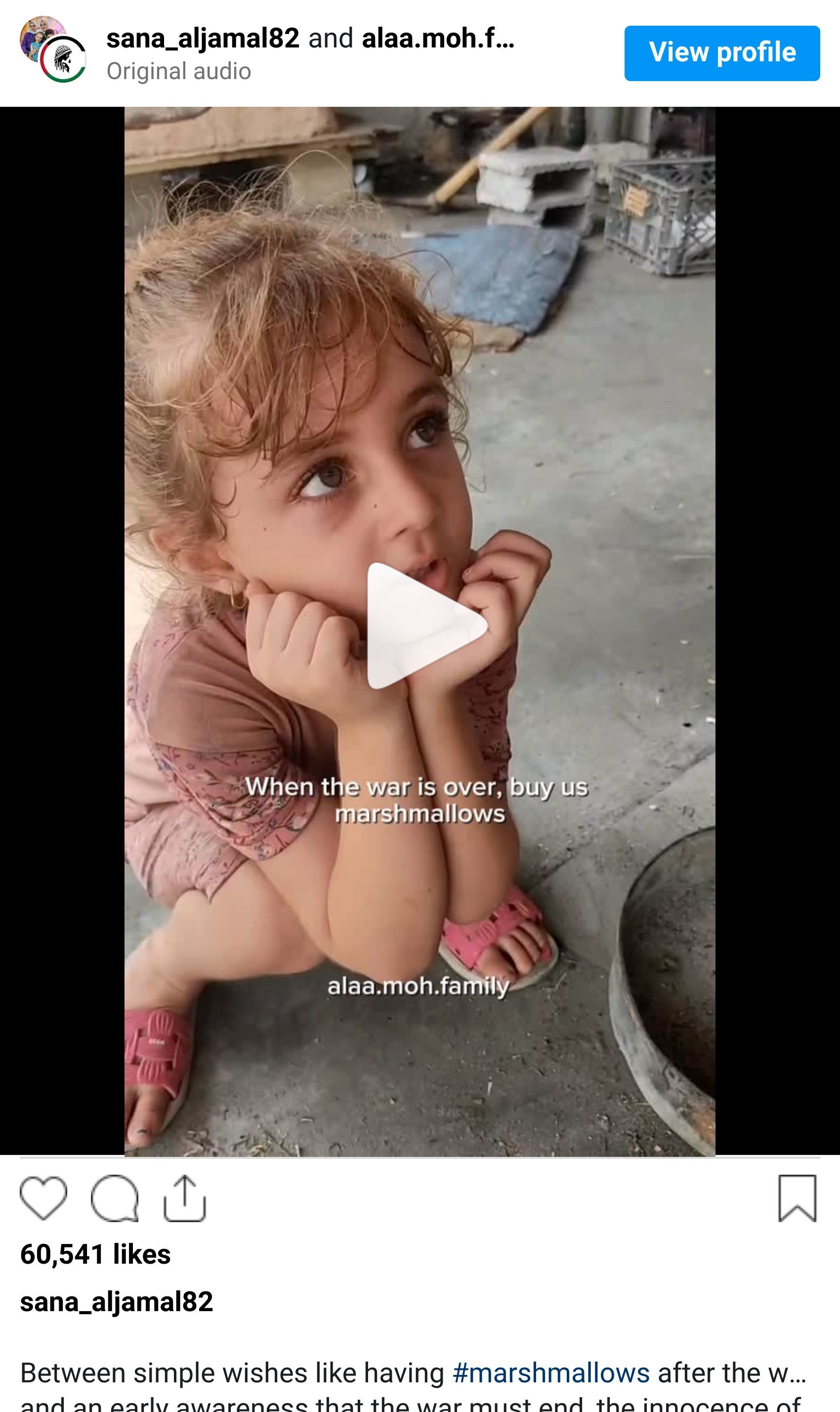
And then I saw her. A little girl in Gaza. Maybe six years old.
Someone asked her what she wanted. She said, “Marshmallows.”
Not a doll. Not a game.
Just something sweet she probably tasted once and never forgot.
There weren’t any marshmallows.
There wasn’t any food in the house at all.
No bread. No rice. No milk.
Just empty shelves and a body that wouldn’t stop asking.
That’s when it broke me.
Because this little girl wasn’t craving sugar for fun.
Her body was begging for it to survive.
When starvation goes on long enough, the brain searches for the fastest energy it can remember. That’s why starving children ask for sweets. Not because they’re spoiled. But because their organs are shutting down, and sugar feels like survival.
She wasn’t asking for a treat.
She was asking her body not to eat itself.
And no one could give it to her.
What we spend on snacks in a day can become real meals for families like hers. Warm, proper food that helps children grow instead of just endure.
That’s why our kitchen in Gaza matters.
We are feeding families every single day. Hot meals. Real food.
The kind that stops the dizziness.
The kind that gives parents one less nightmare to carry.
The kind that means a child doesn’t have to beg her body to hold on until tomorrow.
£30 feeds 10 children today.
Not someday. Today.
If you can spend £30 on things you don’t need this week, you can spend it on a child who is starving for something as small as sugar.
This is me asking plainly: Give today.
Because a six-year-old shouldn’t know what it feels like to crave marshmallows just to stay alive.
Carrying her question with me,
Hafsa
